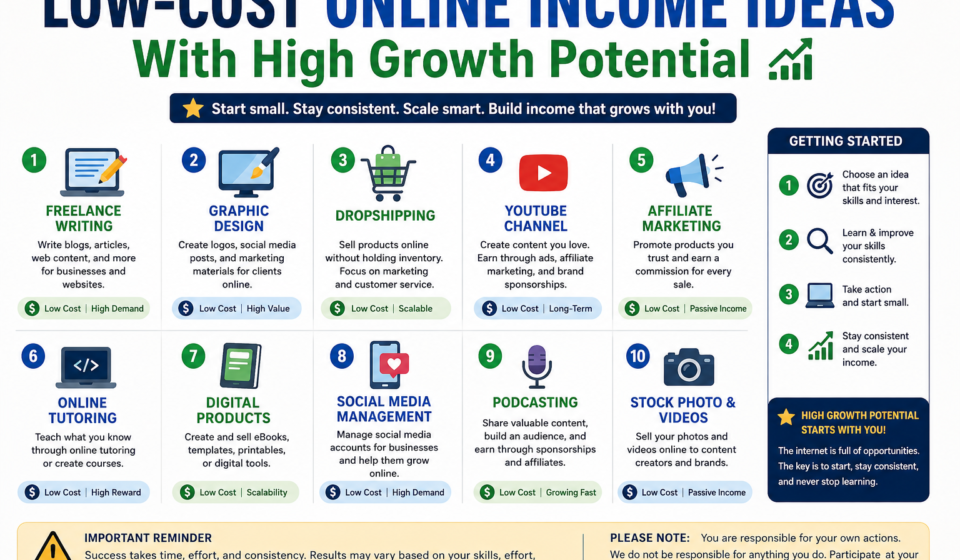

The digital economy has undergone a massive shift. Starting a business used to require a physical lease, upfront inventory costs, and thousands of dollars in infrastructure. Today, the initial capital you need has plummeted, while the potential to scale has grown exponentially. According to recent market data, the global digital goods market is valued at over $157 billion, and it is projected to skyrocket past $511 billion by 2031, expanding at a blistering compound annual growth rate (CAGR) of over 26%.
This economic shift presents a historic window of opportunity. Whether you are a blogger looking to diversify your traffic, a freelancer tired of trading time for dollars, or a digital creator searching for sustainable cash flow, the internet is ready to reward high-leverage assets.
The secret to success is choosing business models that require minimal financial investment upfront but possess uncapped growth potential through automation, recurring revenue, or infinite digital replication.
Let’s dive into the most lucrative, low-overhead digital income models that can help you secure long-term profit.
1. Building a Digital Product Marketplace (Templates, Presets, and Frameworks)
One of the cleanest ways to generate high-margin online income is by packaging your existing expertise into downloadable digital assets. When you sell a physical item, every sale requires manufacturing, shipping, and fulfillment. When you sell a digital product, your manufacturing cost is spent once—during the creation phase. Your replication cost is absolute zero.
Knowledge workers are constantly looking for ways to streamline their personal and professional workflows. This has created a massive boom in the productivity template ecosystem.
High-Demand Assets to Build
- Notion and Airtable Ecosystems: Custom dashboards built for niche operators, such as content calendars for video editors, CRM systems for freelancers, or real estate pipeline trackers.
- Design Assets and Kits: Social media template kits, stylized Canva slide decks, vector UI components, and professional Adobe Lightroom presets.
- Advanced Data Trackers: Highly programmatic financial models in Google Sheets, automated tax calculators, and inventory logs for retail businesses.
Strategic Execution: From Zero to Automated Profits
To build a highly scalable digital storefront without spending hundreds on software tools, begin by hosting your products on low-fee platforms like Gumroad, Lemon Squeezy, or Etsy. Focus your attention on a hyper-specific niche audience rather than trying to build generic tools.
For instance, creating a general “fitness tracker” will pit you against massive, established legacy competitors. However, building an “Advanced Powerlifting Analytics Tracker for Competitive Masters Athletes” isolates a specific buyer group who will gladly pay a premium for a tailored solution.
Optimize your product listings by embedding clear, high-resolution visual previews or video walkthroughs. Once your storefront begins generating organic traction, you can reinvest your initial profits into building a self-hosted e-commerce ecosystem via Shopify or Woo, allowing you to bypass external marketplace transaction fees.
2. Setting Up an Actionable Micro-SaaS Business
The Software-as-a-Service (SaaS) model has long been regarded as the gold standard of online business due to its predictable, recurring monthly revenue (MRR). In the past, launching a software company required hiring a team of engineers or spending months learning full-stack development. Today, the rise of powerful visual programming tools has made it entirely possible to launch a profitable software asset with zero coding background.
A “Micro-SaaS” is a highly focused software application that solves one specific problem for a very defined user base. Because the scope is narrow, the upfront development costs are incredibly low, but the growth potential remains high.
Examples of High-Growth Micro-SaaS Products
- Freelancer Invoice Generators: Simple web apps that cleanly format, track, and send invoices with automated late-payment reminders.
- Local Service Booking Engines: No-frills booking software tailored specifically for local businesses like pet groomers, independent salons, or auto mechanics.
- Social Media Formatting Assistants: Light web tools that help creators clean up line breaks, generate hashtags, or preview layouts for text-heavy platforms like LinkedIn and Threads.
Leveraging Visual Development Tools
You can build, test, and launch these applications at a fraction of the traditional cost by utilizing visual development tools like Bubble, FlutterFlow, or Lovable. These platforms allow you to visually design a working software architecture, link databases, and connect secure payment rails like Stripe without writing line-by-line code.
The true magic of the SaaS model lies in compounding returns. Securing just 200 users who happily pay a modest subscription fee of $25 per month yields a highly stable, predictable $5,000 in monthly recurring revenue.
3. Launching a Premium Curated Newsletter and Media Asset
The creator economy is entering an era of platform fatigue. Algorithms fluctuate constantly, organic reach on major social networks continues to drop, and public feeds are increasingly cluttered. As a result, audiences are eagerly seeking direct, high-value, curated insights delivered straight to their personal inboxes.
Building an independent, niche newsletter is one of the lowest-cost media businesses you can start. Platforms like Beehiiv, Substack, and ConvertKit offer robust, comprehensive free tiers that enable you to build, segment, and email an audience of thousands before ever paying a single dollar in subscription fees.
[Audience Discovery via Social / SEO]
               │
               ▼
   [Free Newsletter Value Loop] ───► [Premium Paid Tier (Deep Dives)]
               │
               ▼
[Sponsorships & High-Ticket Affiliates]
Strategic Growth Framework
- The Value Loop: Distribute high-signal, actionable industry analysis or deeply researched roundups once or twice every week. Ensure your free content is consistently practical.
- The Paid Tier: Gate your deep-dive case studies, proprietary data sets, tool reviews, or exclusive community access behind a monthly premium subscription (typically ranging between $8 and $20 per month).
- B2B Programmatic Sponsorships: Once your active subscriber base crosses 2,500 readers, open up dedicated native ad slots. Premium industry newsletters frequently command healthy ad rates ranging from $30 to $75 per thousand impressions (CPM), turning a highly engaged audience into a reliable cash flow engine.
4. Establishing a Modern High-Ticket Affiliate Content Authority
Traditional, low-ticket affiliate marketing—such as promoting inexpensive consumer goods with tiny single-digit commissions—is a difficult grind that requires millions of monthly pageviews just to pay the bills. Modern affiliate marketing flips this old dynamic on its head by focusing exclusively on high-ticket B2B software, specialized infrastructure, and high-value professional services.
Instead of hunting for $1 commissions on a physical book, you should look to promote cloud infrastructure, advanced marketing suites, financial tools, and enterprise SaaS platforms. These products frequently pay substantial bounties or recurring lifetime rev-share commissions that can reach $100 to $500 per individual conversion.
| Program Type | Example Niches | Commission Structure | Typical Yield Per Sale |
| Enterprise B2B SaaS | CRM systems, Project Management software | 20% – 30% Lifetime Recurring | $50 – $200 / month |
| Digital Infrastructure | Specialized Web Hosting, Cloud Security | High-fixed CPA (Cost Per Acquisition) | $150 – $500 one-time |
| FinTech & Accounting | Automated Bookkeeping, Premium Payroll | Hybrid (Flat fee + Percentage) | $100 – $300 one-time |
Building Your Content Engine
To stand out in search engines and rank above generic review sites, your content must emphasize real-world testing and high editorial authority. Avoid publishing thin, repetitive listicles that offer nothing more than a summary of a product’s marketing page.
Instead, produce deeply analytical, step-by-step product walkthroughs, transparent comparison pieces, and data-backed case studies showing exactly how the software solves a business problem. By targeting high-intent long-tail keywords (such as “Best automated accounting tools for multi-state e-commerce”), you attract a smaller but highly qualified pool of buyers who are already holding their credit cards and ready to purchase.
5. Monetizing Specialized E-Learning Programs
The global e-learning services ecosystem is on a massive upward trajectory, projected to reach an astronomical valuation of over $842 billion by 2030. While platforms like Udemy and Coursera are flooded with cheap, entry-level video courses, there is an underserved and highly lucrative demand for premium, specialized educational programs.
Professionals, managers, and business owners do not want to wade through dozens of hours of generalized video content. They want structured, step-by-step learning paths that help them master a complex skill or solve a pressing professional problem as quickly as possible.
Structuring a Premium Cohort or Course
- Identify the Transformation: Shift your positioning away from selling raw information toward selling an actionable result. For example, instead of naming your program “Introduction to Email Marketing,” brand it as “The 30-Day Automated Lead Funnel: Build, Launch, and Capture Your First 1,000 Subscribers.”
- The Modern Tech Stack: Keep your overhead exceptionally lean. Host your training videos, resource files, and interactive modules on all-in-one community platforms like Skool, Circle, or Teachable.
- Scale with Hybrid Models: Combine your asynchronous video material with a structured, community-driven space or monthly live Q&A sessions. This interactive layer keeps your students highly engaged, justifies a premium ticket price ($200 to $1,000+), and builds a loyal audience base that will enthusiastically purchase your future advanced programs.
Strategic Playbook: Building a Sustainable Digital Income Engine
Launching a low-cost, high-growth online business is a fantastic way to escape the corporate grind and build genuine wealth. However, achieving long-term success requires avoiding the common trap of chasing every passing digital trend.
To help you move from a blank page to a fully operational Digital asset, here is a practical roadmap to keep your momentum steady and focused.
1.Isolate Your Market Edge:Week 1.
Analyze your professional skills, past career history, or deepest technical interests. Cross-reference your knowledge against painful, real-world business problems. Choose one single target audience and one specific problem you can solve.
2.Deploy Your Minimum Viable Asset:Weeks 2-3.
Build a lean, functional version of your offer without overcomplicating the technology. Launch a simple, clean landing page using Carrd or Framer. Create your first downloadable digital template, structure your initial newsletter sequence, or outline your primary consulting framework.
3.Establish an Organic Traffic Engine:Weeks 4-6.
Produce deeply helpful, authoritative content to attract your ideal buyers. Publish detailed, optimization-focused articles on your own website, and share your practical breakdowns on high-visibility networks like LinkedIn, YouTube, or Threads to build search visibility and audience trust.
4.Automate Systems and Reinvest Profits:Ongoing.
As your early sales start rolling in, shift your manual processes to automated workflows. Connect automated email delivery flows using platforms like ConvertKit, set up seamless checkout pipelines via Stripe, and reinvest your revenue into custom branding or targeted ad campaigns to accelerate growth.
The Power of Compounding Assets: The most successful digital entrepreneurs treat their business like an investment portfolio. Every blog post, email sequence, or digital template you create is a permanent digital asset that works for you 24/7, pulling in traffic and revenue while you focus on building the next piece of your ecosystem.
Frequently Asked Questions (FAQ)
Which online income stream has the lowest startup cost?
Building a premium curated newsletter and creating digital templates have the absolute lowest financial barriers to entry. Tools like Notion, Google Sheets, and Canva can be used entirely for free to build valuable digital products. Similarly, newsletter services like Substack and Beehiiv allow you to build an audience up to thousands of subscribers with zero upfront platform fees. Your only real investment is the time required to create the assets and write the content.
Can I run a Micro-SaaS business if I don’t know how to code?
Yes, absolutely. The modern visual development ecosystem has removed traditional coding barriers. No-code platforms like Bubble, FlutterFlow, and visual AI builders allow non-technical founders to build complex web and mobile applications with databases, secure user authentication, and API integrations. The key is focusing on a simple utility tool that addresses a clear user friction point.
How long does it typically take to see consistent profits from affiliate marketing?
For an authority content site, it generally takes between 6 to 12 months of consistent, SEO-optimized publishing to rank well on search engines and generate steady income. However, you can significantly accelerate this timeline by sharing your long-form articles directly on professional social networks like LinkedIn or across niche communities where your target audience already hangs out.
Is the e-learning space overcrowded for new content creators?
While generic, low-cost courses are highly saturated, the market for premium, specialized, and transformational educational content is booming. Modern learners are willing to pay a premium for structured, highly focused programs that value their time and deliver an actionable professional outcome. Success comes down to teaching a specific skill you have mastered firsthand.
How do I protect my digital products from being copied or pirated?
While it is impossible to completely prevent digital piracy, you can effectively mitigate it by delivering ongoing, integrated value that goes beyond a basic download. Bundle your digital products with access to a private, interactive community, include regular software or template updates, or offer exclusive live Q&A sessions. Customers gladly pay for the official ecosystem, the support network, and the continuous updates.
Final Takeaways: Turning Ideas Into Action
Building a high-growth online business is a deliberate, step-by-step compounding process. To maximize your chances of success, keep these core principles in mind:
- Prioritize Margin and Scalability: Focus your energy on digital assets that cost nothing to replicate and boast profit margins above 90%.
- Solve Specific Real-World Problems: Move past generic topics and build products that address clear, acute pain points for a highly defined audience.
- Own Your Audience Relationships: Avoid relying solely on unpredictable social media algorithms; actively funnel your traffic into an independent email list that you control entirely.
- Commit to Consistency: The compound interest of search engine optimization and audience trust requires sustained effort. Stay dedicated to your chosen model for at least 6 to 12 months to see real results.