5 Powerful Digital Growth Trends Changing the Internet (And How to Adapt)

If you feel like the internet is becoming completely unrecognizable lately, you aren’t imagining things. The days of static websites, simple keyword stuffing, and predictable social media algorithms are officially gone.
We have entered an entirely new era of the online landscape. User patience is at an all-time low, privacy protections are at an all-time high, and artificial intelligence has evolved from a fun experimental tool into the very fabric of how people discover information.
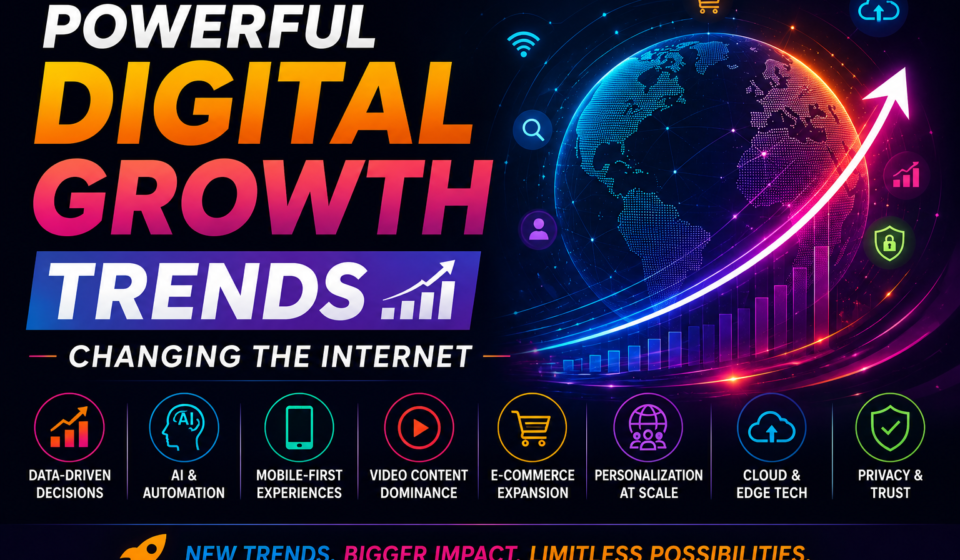
For business owners, content creators, and Marketing professionals, this means the old playbook is obsolete. To survive and thrive, you have to understand the forces reshaping our screens. Let’s explore the most powerful digital growth trends changing the internet and look at how you can use them to scale your brand sustainably.
The Big Shift: From Traffic Volume to Attention Retention
Before exploring individual tactics, it is crucial to recognize the underlying shift in the digital economy. The internet is no longer just experiencing a traffic competition—it is locked in an intense battle for sustained human attention.
Because consumers are constantly bombarded with endless notifications, algorithmic feeds, and auto-playing media, getting a casual click is no longer a victory. True online expansion relies on holding a user’s attention long enough to build real, unshakeable brand authority. If your digital strategy only focuses on getting people to your site rather than keeping them engaged once they arrive, your brand risks becoming invisible.
5 Mega Trends Redefining Online Brand Success
To secure a prime spot on user-curated feeds like Google Discover and maintain high search visibility, your business must align with these major technical and behavioral transformations:
1. Conversational Search and Search Everywhere Optimization (SEO)
People no longer search the web using fragmented, robotic keyword strings like “best running shoes buy.” Instead, they type or speak full, natural questions into voice assistants and generative search engines.
Furthermore, discovery has decentralized. Audiences are increasingly looking for brand recommendations inside platforms like TikTok, YouTube, and specialized AI tools. To remain visible, your content must provide clear, direct, and conversational answers that satisfy specific user intents wherever they choose to look.
2. The Move to Transparent, First-Party Data Systems
With third-party tracking cookies quickly fading into history and global privacy regulations tightening, passive audience tracking is no longer reliable.
Earning consumer trust is now a major financial asset. Leading brands are prioritizing direct, first-party data collection through opt-in newsletters, customer surveys, gated educational hubs, and custom applications. When users willingly share their preferences with you, your marketing sequences become far more precise and effective.
3. High-Value, Zero-Friction Short-Form Video
Short-form video continues to command billions of hours of screen time across the globe. However, the style of successful video content has shifted dramatically.
Audiences are tuning out overly polished, corporate advertisements. Instead, they reward raw, authentic, and educational clips that deliver a clear point of view within the first three seconds. Successful brands are using short video formats to tell stories and solve problems rather than push immediate, hard sales.
4. Experience-Driven, Interactive Web Frameworks
Static text blocks and basic image galleries no longer cut it. Modern web spaces are transforming into dynamic environments where users can actively engage with content.
Websites that feature instant calculators, product match quizzes, and interactive data visualization tools keep users on the page significantly longer. This deep engagement sends excellent performance signals to modern search algorithms, directly boosting organic rankings.
5. Hyper-Personalization via Unified Workflows
Consumers expect websites to understand their unique needs instantly. Delivering the exact same home page experience to a first-time visitor and a ten-year loyal client is a massive missed opportunity.
Smart organizations are utilizing integrated systems to analyze real-time user behavior, allowing them to adjust layout designs, highlight relevant articles, and suggest tailored services dynamically without breaking the brand’s authentic, human voice.
Common Growth Traps to Dodge in a Changing Market
Rapid technological shifts often cause businesses to make costly strategic errors. Ensure your company avoids these frequent pitfalls:
- Publishing Mass-Produced, Generic Content: Flooding the internet with hundreds of thin, automated articles that sound exactly like your competitors will get your site penalized by modern search engines. Prioritize deep human insight, unique case studies, and real-world experience.
- Chasing Vanity Metrics Over Conversions: Millions of video views or website impressions mean absolutely nothing if your checkout system is confusing. Always optimize your user paths to turn casual interest into verifiable business revenue.
- Ignoring Desktop and Mobile Performance Speed: A beautiful, interactive website is completely useless if it takes longer than two seconds to load over a mobile connection. Clean up your code and optimize your media assets to keep load times lightning-fast.
- Failing to Retain Earmarked Traffic: Spending your entire budget on finding new customers while neglecting the audience you have already won is a recipe for operational burnout. Focus heavily on continuous relationship building.
Expert Frameworks to Modernize Your Scaling Strategy
Ready to turn these industry shifts into a distinct competitive advantage? Implement this actionable blueprint to future-proof your digital assets.
Craft Deep, Authoritative Resource Pillars
Identify the top ten core problems your target demographic faces. Build comprehensive, well-structured, and easy-to-read resource hubs that address these issues completely. Break up your text with bullet points, bold key phrases, and clear headings to make scanning effortless.
Build Direct, Owned Distribution Channels
Do not let a third-party social media platform hold your audience hostage. Use compelling lead magnets and exclusive content to move casual platform followers over to an email newsletter list or a dedicated community platform that you own and control completely.
Collaborate with Specialized Implementation Experts
Trying to stay on top of daily algorithmic changes, technical code adjustments, conversion optimization, and omnichannel marketing frameworks all by yourself can lead to immediate operational bottlenecks.
Smart brand leaders delegate specialized technical tasks to proven professionals. If you are looking to audit your existing systems and deploy advanced, future-proof marketing structures designed to capture consistent organic traction, partnering with a forward-thinking growth solution firm like https://growthpulsesol.com/ can help you navigate the changing internet with total clarity.
Frequently Asked Questions (FAQs)
1. How has AI changed the way websites should approach SEO?
AI has shifted search away from simple keyword matching toward absolute user intent. Search engines now look for deep contextual relevance, structural clarity, and first-hand human expertise. To rank well, your content must directly answer questions thoroughly rather than repeating specific phrases.
2. Why are third-party cookies disappearing, and how does it affect my business?
Third-party cookies are being phased out due to rising consumer demand for data privacy and strict global legal regulations. This means you can no longer rely on external networks to track user behavior across the web. You must build your own data foundation by collecting email sign-ups and first-party customer feedback directly.
3. Is short-form video useful for B2B companies, or is it just for consumer brands?
It is incredibly effective for B2B brands when executed correctly. B2B audiences are still humans looking for fast, clear solutions. Using short-form video to explain a complex industry framework, share a quick client success story, or debunk a common industry myth builds massive professional trust rapidly.
4. What is a “Zero-Click” search, and how do I optimize for it?
A zero-click search occurs when a user finds the answer to their question directly on the search engine results page (via a featured snippet or AI summary) without clicking on any website link. To optimize for this, provide clear, beautifully structured summary sentences at the top of your content to win the snippet slot, followed by deep background analysis that encourages the reader to click through for the full story.
5. How quickly should a website load to maintain high search rankings?
Ideally, your website should load completely in under two seconds on both desktop and mobile devices. Any delay past three seconds causes bounce rates to skyrocket, which damages your overall search engine health and tanks your consumer conversion rates.
Conclusion: Lead the Change, Don’t Follow It
The profound changes sweeping through the online space can feel intimidating, but they represent an incredible opportunity for brands willing to adapt. By moving away from superficial marketing shortcuts and focusing heavily on conversational clarity, user data privacy, interactive value, and genuine human connection, you protect your company from future disruption.
The internet isn’t broken—it is simply evolving to become more useful, interactive, and human. Align your business assets with that evolution, and sustainable expansion will follow naturally.
Are you ready to stop reacting to the market and start leading your industry with advanced digital infrastructure? Reach out to the team at Growth Pulse Solutions today, and let’s craft a cutting-edge strategy that turns these global internet trends into long-term commercial success.