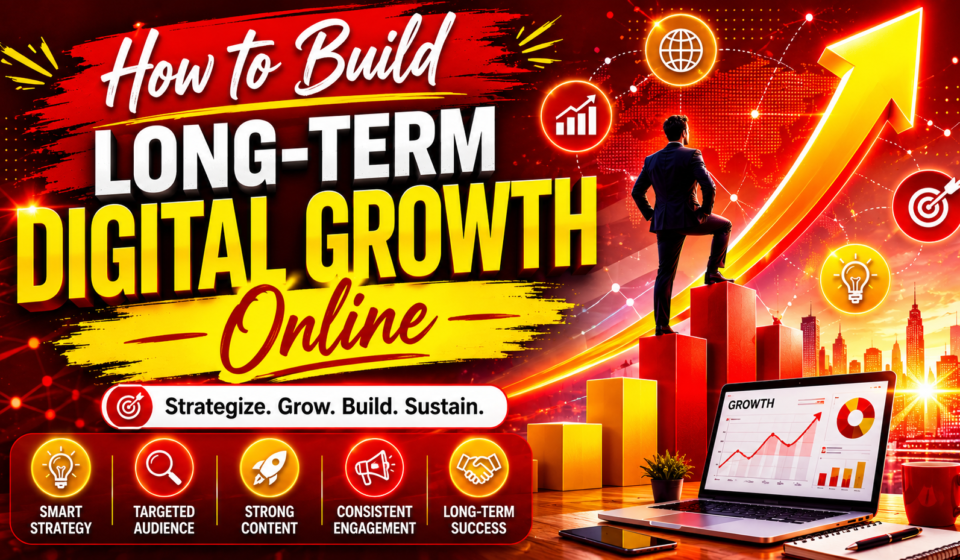
How to Build Long-Term Digital Growth Online: The Sustainable Blueprint

We have all seen it happen. A brand launches an aggressive ad campaign, bursts onto the scene with massive traffic spikes, and looks like an overnight success. Then, a few months later, their ad budget dries up, a search engine algorithm shifts, or consumer habits change—and they vanish.
Relying entirely on quick wins or viral trends is like building a house on a foundation of sand. In the fast-moving online landscape, temporary spikes are easy to buy. However, enduring success requires something deeper.
True business scalability is built by playing the long game. Let’s break down exactly how to build long-term digital growth online so your brand can attract, convert, and retain high-value customers predictably for years to come.
What Does Long-Term Digital Growth Actually Mean?
Before mapping out a strategy, it helps to look at what sustainable expansion really looks like.
The Organic Growth Engine
Achieving sustainable development online means creating an interconnected ecosystem where your Digital assets compound in value over time. Instead of treating marketing like a faucet that shuts off the moment you stop paying for ads, you construct an engine.
This process involves blending technical optimization, authoritative content, deep audience trust, and data-backed retention systems. When these elements align, your organic visibility, brand equity, and customer lifetime value grow naturally—and require less manual effort over time.
Why a Sustainable Digital Ecosystem is Non-Negotiable
Shifting your focus from quick, transactional conversions to a continuous roadmap delivers massive competitive advantages:
- Compounding ROI: Unlike paid advertising, where every click costs money, high-quality SEO and organic content keep generating leads years after they are published without additional cost.
- Immunity to Algorithm Spikes: When search engines or social media platforms update their systems, thin or AI-spammed websites drop out of sight. Authoritative brands that provide genuine user value emerge untouched—or even stronger.
- Lower Customer Acquisition Costs (CAC): As your online reputation grows, word-of-mouth, direct search traffic, and referral loops naturally lower the cost of winning new business.
- Predictable Revenue Scaling: A diversified digital footprint ensures that even if one channel slows down, your business continues to generate steady revenue from others.
The Landscape: Core Pillars Dominating in 2026
To ensure your brand stands out on search algorithms and discovery feeds like Google Discover, your strategy must reflect how the internet operates today.
Human-First Content Depth
Search engines prioritize content that displays first-hand experience, deep expertise, and genuine value. Thin, automated summaries are out; deeply researched, original guides that completely satisfy a user’s intent are winning the top spots.
Community and Brand Authority
With algorithmic channels shifting constantly, owning your audience is critical. Cultivating direct distribution channels—such as private communities, broadcast networks, and hyper-segmented email lists—protects your brand from third-party platform changes.
Zero-Click Search Optimization
Modern platforms frequently answer user questions directly on the search page. To thrive here, your content must offer clear, structured insights that secure high-profile snippets, while maintaining enough contextual depth to encourage users to click through for the full story.
4 Common Growth Mistakes That Drain Your Budget
Building a lasting online presence requires knowing what to avoid just as much as knowing what to execute:
- Relying Solely on Paid Ads: Using paid channels to kickstart your business is highly effective. Relying on them as your only customer source, however, creates a fragile business model that collapses the moment ad costs rise.
- Ignoring Data Analytics: Guessing what your audience wants is an expensive mistake. If you aren’t tracking conversion funnels, bounce rates, and customer behavior, you are missing clear opportunities to optimize.
- Neglecting Mobile Performance: If your website takes more than two seconds to load on a smartphone, or features frustrating navigation, users will leave immediately to find a competitor.
- Failing to Nurture Existing Leads: Chasing new traffic while ignoring the users who already know, like, and trust your brand is incredibly inefficient. Retention is the true secret weapon of scaling.
Expert Frameworks to Build Long-Term Digital Growth Online
Ready to transition from short-term tactics to an enduring online foundation? Implement this actionable framework to set your brand apart.
1. Establish an Authoritative Content Strategy
Do not just write about your industry—own your niche. Identify the specific, high-intent questions your target audience asks during their buying journey, and create comprehensive resources that address them directly.
2. Optimize the Technical User Journey
Ensure your digital platform is clean, fast, and structured properly for search crawlers. Use intuitive internal linking to guide visitors seamlessly from an educational blog post down to your core product or service landing pages.
3. Implement Intelligent Retention Funnels
Capture every bit of traffic you earn. Use tailored lead magnets, automated email onboarding, and value-focused newsletters to keep your brand top-of-mind, turning one-time casual visitors into loyal, lifetime clients.
For brands looking to streamline this process, collaborating with professional implementation partners can save months of trial and error. If you want to dive deeper into custom roadmaps that build reliable momentum, exploring specialized growth services like those at https://growthpulsesol.com/ can help you systematically align your marketing funnels.
Frequently Asked Questions (FAQs)
What is the difference between short-term growth hacks and long-term digital growth?
Short-term growth hacks rely on temporary loopholes, sudden ad spend, or fleeting trends to generate rapid, unsustainable traffic spikes. Long-term digital growth focuses on building owned assets, optimizing user experience, and developing solid organic SEO that predictably converts over time.
How often should we audit our digital marketing strategy?
A comprehensive review of your technical performance, traffic quality, and conversion funnels should occur quarterly. This cadence allows you to adapt to market shifts while giving your core organic strategies enough time to mature.
Can a small business compete with enterprise brands in organic search?
Yes. Large brands often target broad, generic terms. Small businesses can win by dominating hyper-specific long-tail keywords, showcasing localized authority, and providing deeper, more tailored answers to user needs.
Conclusion: Turn Continuous Value Into Your Greatest Asset
The secret to building a highly visible, resilient brand online isn’t hidden inside a secret algorithm hack. It is found in consistency, user-first optimization, and an unwavering focus on building assets that compound in value over time.
By prioritizing deep content value, clear conversion paths, and data-driven customer retention, you protect your business from unpredictable shifts and establish an enduring source of organic revenue.
Are you ready to stop chasing temporary traffic spikes and start building a digital foundation that scales predictably? Book a strategy session with Growth Pulse Solutions today, and let’s design a custom roadmap to secure your long-term market leadership.