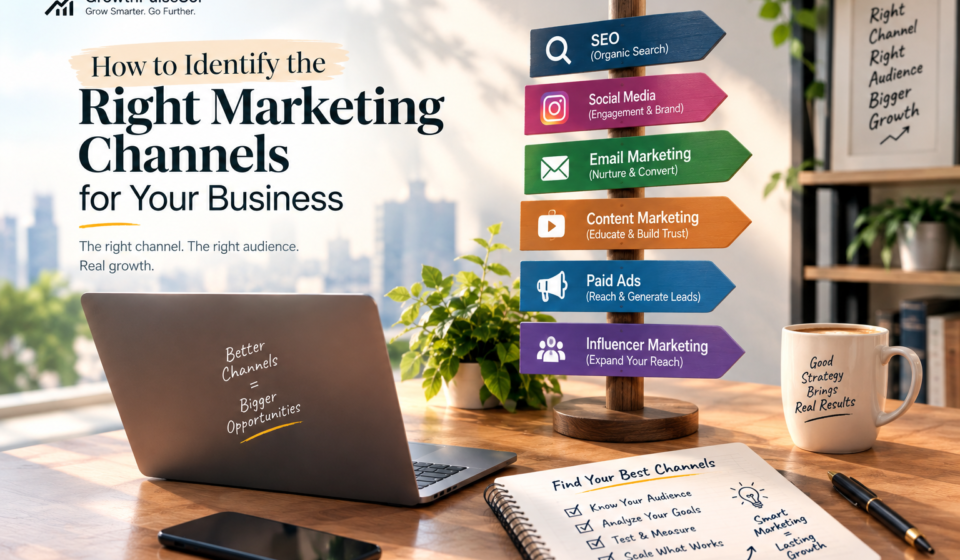

In today’s fast-paced digital landscape, business owners and growth marketers face an overwhelming dilemma: where should you spend your time, energy, and budget?
With dozens of emerging platforms, social networks, search engines, ad formats, and community spaces available, trying to maintain a presence everywhere is a fast track to burnout and wasted ad spend. Spread your resources too thin across ten different channels, and you will get mediocre results on all of them. Focus deeply on two or three channels tailored specifically to your business, and you can build a predictable, high-converting customer acquisition engine.
Identifying the right marketing channels isn’t a matter of luck or following trendy fads. It is a systematic process rooted in audience research, business unit economics, product analysis, and iterative testing.
This guide provides a comprehensive framework to help you discover, evaluate, test, and scale the ideal marketing channels for your business.
Step 1: Understand the Spectrum of Marketing Channels
Before selecting your channels, you must understand the primary categories available. Marketing channels generally fall into three main operational buckets: Owned, Earned, and Paid media.
┌─────────────────────────────────────────────────────────────┐
│                 The Core Media Spectrum                     │
├──────────────────────┬──────────────────────┬───────────────┤
│ Owned Media          │ Earned Media         │ Paid Media    │
├──────────────────────┼──────────────────────┼───────────────┤
│ Website & Blog       │ Organic PR & Press   │ Search Ads    │
│ Email / SMS Lists    │ Word-of-Mouth        │ Social Ads    │
│ Mobile App           │ SEO Rankings         │ Sponsorships  │
│ Community Groups     │ Social Mentions      │ Influencer Ads│
└──────────────────────┴──────────────────────┴───────────────┘
1. Organic Search & Content Marketing (SEO)
- What it includes: Blog posts, technical documentation, tools, landing pages optimized for search engines like Google and Bing.
- Best for: Long-term sustainable growth, high-intent products, B2B software, complex or high-consideration purchases.
- Pros: Builds long-term organic equity, attracts users actively seeking solutions.
- Cons: Slow compound growth (often takes 6 to 12 months to show substantial returns).
2. Paid Search (PPC)
- What it includes: Google Search Ads, Bing Ads, intent-driven shopping campaigns.
- Best for: Capturing existing demand immediately, emergency services, high-converting e-commerce, competitive B2B spaces.
- Pros: Immediate visibility and high purchase intent.
- Cons: Expensive cost-per-click (CPC) in competitive niches; traffic stops as soon as the ad budget ends.
3. Organic Social & Community Building
- What it includes: Platforms like LinkedIn, X (Twitter), Instagram, TikTok, YouTube, Reddit, Discord, and specialized forums.
- Best for: Brand storytelling, building authentic audience relationships, visually engaging products, thought leadership.
- Pros: Direct communication line with users; potential for viral awareness.
- Cons: Algorithm updates can drastically cut organic reach overnight.
4. Paid Social Advertising
- What it includes: Targeted ads on Meta (Facebook & Instagram), TikTok, LinkedIn, YouTube, and Pinterest.
- Best for: Creating new demand, impulse buys, visually striking products, precise demographic or firmographic targeting.
- Pros: Powerful audience profiling and visual storytelling.
- Cons: Ad fatigue sets in quickly; requires continuous creative refreshes and rising customer acquisition costs (CAC).
5. Email & SMS Marketing
- What it includes: Welcome sequences, promotional campaigns, newsletter updates, transactional triggers, cart recovery messages.
- Best for: Retaining customers, driving repeat sales, nurturing cold leads into warm buyers.
- Pros: You own the distribution channel outright without algorithmic gatekeepers.
- Cons: Requires a steady influx of subscriber signups through other discovery channels.
6. Strategic Partnerships & Affiliates
- What it includes: Co-marketing initiatives, affiliate networks, influencer sponsorships, integration partnerships.
- Best for: B2B platforms, e-commerce brands tapping existing communities, SaaS tools with complementary software.
- Pros: Instantly leverages established trust from third-party audiences.
- Cons: Requires revenue sharing, ongoing partner management, and relationship cultivation.
Step 2: Define Your Customer Persona and Intent Level
A common marketing mistake is picking channels based on personal preference rather than where target customers spend time and how they buy.
                       [ High Intent ]
                              │
               Search Ads     │     SEO
               Directories    │     Review Sites
                              │
  Demand Capture ─────────────┼───────────── Demand Generation
                              │
               Paid Social    │     Influencers
               Display Ads    │     Organic Social
                              │
                        [ Low Intent ]
Map the Buyer Intent Spectrum
Different channels serve different stages of the buyer’s journey. To select the right channels, map out whether your product addresses active demand or latent demand.
- High Intent (Demand Capture): The prospect already knows they have a problem and is actively searching for a solution.
- Example: A business owner searching for “best accounting software for small business” or an homeowner looking for “emergency plumber near me.”
- Primary Channels: Google Search Ads, Organic SEO, Capterra/G2 reviews, Amazon search.
- Low Intent / High Discovery (Demand Generation): The prospect is browsing for entertainment, news, or connection and isn’t actively searching for your solution at that moment.
- Example: A user scrolling TikTok who discovers an ergonomic seat cushion video.
- Primary Channels: Paid Social (Meta/TikTok), Influencer Marketing, Organic Video, Native Display.
Build Your Channel-Focused Customer Profile
Answer these core questions before committing capital to a platform:
- What demographic or job title defines your primary decision-maker?
- Where do they turn when they hit a professional or personal obstacle?
- Do they prefer watching long-form video, reading technical breakdowns, or listening to podcasts on their commute?
- What social platforms do they check during downtime versus work hours?
Step 3: Evaluate Product-Channel Fit and Unit Economics
Not all products belong on all channels. Your business model, price point, and customer lifetime value (LTV) heavily dictate which marketing methods are financially viable.
┌─────────────────────────────────────────────────────────────┐
│                 Price Point vs. Channel Match               │
├──────────────────────┬──────────────────────────────────────┤
│ Contract / Price     │ Ideal Marketing Channels             │
├──────────────────────┼──────────────────────────────────────┤
│ Low ($10 – $100)     │ Viral Organic, Low-Cost Paid Social  │
│ Medium ($100 – $1k)  │ Search Ads, Content SEO, Email Flows │
│ High ($1k – $10k+)   │ Targeted LinkedIn, Account-Based Mktg│
│ Enterprise ($50k+)   │ Direct Sales, Events, ABM, High-PR   │
└──────────────────────┴──────────────────────────────────────┘
1. Price Point and Customer Lifetime Value (LTV)
- Low Average Order Value (AOV): If you sell a $25 consumer item with a low customer lifetime value, expensive channels like LinkedIn Ads ($6+ per click) or direct outbound sales reps will immediately destroy your margins. You need high-volume, low-cost acquisition channels—such as organic social, viral TikTok video, or affiliate partnerships.
- High LTV or Enterprise Services: If your average software deal or consulting contract yields $20,000 annually, you can easily afford high customer acquisition costs. You can invest aggressively in custom field events, paid search for competitive keywords, outbound account-based marketing (ABM), and targeted LinkedIn campaigns.
2. Product Visual Appeal and Complexity
- Visually Striking Products: Fashion, home decor, food, and lifestyle goods perform exceptionally well on visual, emotion-driven discovery platforms like Instagram, Pinterest, and TikTok.
- Complex, Technical, or Abstract Products: Developer tools, enterprise SaaS, and financial advisory services require education and trust. They perform better on long-form YouTube tutorials, comprehensive technical documentation, detailed blog guides, and industry podcasts.
Step 4: Apply the Bullseye Framework for Channel Selection
Popularized by Gabriel Weinberg and Justin Mares in their book Traction, the Bullseye Framework offers a disciplined method to filter down 19 potential traction channels into the few that will drive meaningful growth.
                     ┌──────────────────┐
                     │   OUTER RING     │
                     │  Brainstorm All  │
                     │  19 Channels     │
                     │ ┌──────────────┐ │
                     │ │ MIDDLE RING  │ │
                     │ │ Test Top 3   │ │
                     │ │ ┌──────────┐ │ │
                     │ │ │ BULLSEYE │ │ │
                     │ │ │ Core 1-2 │ │ │
                     │ │ └──────────┘ │ │
                     │ └──────────────┘ │
                     └──────────────────┘
The Three Rings of the Bullseye Process
Ring 1: The Outer Ring (Brainstorm Everything)
Take an unbiased look at every possible traction channel. Brainstorm at least one specific campaign strategy for each channel, regardless of past biases.
Ring 2: The Middle Ring (Promising Tests)
Narrow your list down to the top 3 channels that show the highest alignment with your customer persona, budget, and business model.
Run low-cost, short-duration traction tests on these three channels to collect real conversion data. Your goal during this stage isn’t to build a fully optimized channel; it is simply to answer three questions:
- What is the approximate cost to acquire a customer on this channel?
- How many potential customers are accessible through this channel?
- Are the users coming from this channel high quality?
Ring 3: The Inner Ring (The Bullseye)
Examine your traction test results. Identify the single channel (or maximum of two) that produced the clear best mix of cost-effective acquisition and scalability. Shift 80% of your resources, budget, and focus into optimizing and scaling this core channel until you hit a point of diminishing returns.
Step 5: How to Run Low-Cost Channel Tests
Testing channels requires a systematic framework so you don’t burn through capital prematurely.
1. Set Clear Success Metrics
Define what constitutes a successful test before spending a single dollar. Common early metrics include:
- Click-Through Rate (CTR): Indicates creative and offer relevance.
- Cost Per Lead (CPL): Measures initial acquisition efficiency.
- Customer Acquisition Cost (CAC): Measures total cost to close a paying client.
- Conversion Rate: Measures destination landing page performance.
2. Timebox and Budget Your Experiments
Do not leave tests running indefinitely without clear guardrails. Set a strict testing budget (e.g., $1,000 per channel or 14 days of campaign activity).
A standard channel experiment should run long enough to gather statistically significant data without exhausting your working capital.
┌────────────────────────────────────────────────────────────┐
│              Standard Channel Testing Plan                 │
├─────────────┬──────────────────────────┬───────────────────┤
│ Phase       │ Goal                     │ Duration          │
├─────────────┼──────────────────────────┼───────────────────┤
│ Setup       │ Asset & Landing Page     │ Days 1–3          │
│ Launch      │ Data Collection & Reach  │ Days 4–10         │
│ Optimization│ Micro-Adjustments        │ Days 11–14        │
│ Review      │ Scale, Pivot, or Kill    │ Day 15            │
└─────────────┴──────────────────────────┴───────────────────┘
3. Avoid Common Testing Pitfalls
- Testing Too Many Variables Simultaneously: If an ad campaign fails, was it the platform, the audience targeting, the creative graphic, or the landing page offer? Change only one core variable at a time during initial diagnostic runs.
- Giving Up Too Early on High-Friction Channels: SEO, content marketing, and podcasting require longer testing windows than paid social ads. Measure these channels using incremental progress metrics (rankings growth, organic impressions) rather than immediate day-one sales.
- Ignoring Attribution Lag: B2B buyers rarely convert on the first visit. Account for longer sales cycles when measuring initial channel profitability.
Step 6: Scale Your Winning Channels and Build Moats
Once you discover your “Bullseye” channel, focus on expanding that winning channel before diversifying into new ones.
1. Maximize Channel Depth Before Breadth
Optimize your core winning channel through deep refinement:
- Paid Channels: Expand lookalike audiences, test dynamic creative variations, build custom retargeting layers, and scale budget incrementally (15–20% increases) to avoid breaking platform optimization algorithms.
- Organic Search / SEO: Expand top-of-funnel educational topics, build topic clusters, upgrade internal linking architecture, and optimize site technical speeds.
- Email / Retention: Implement micro-segmentation based on purchase behavior, setup predictive win-back flows, and test personalized product recommendation engines.
2. Build Channel Diversification Over Time
Relying 100% on a single marketing channel creates platform risk (often called “Platform Risk” or “Sharecropping”). Algorithm changes, ad account suspensions, or rising ad costs can cripple a business overnight.
Once your primary channel is stable, profitable, and predictable, allocate 20% of your marketing resources back into testing secondary channels from your Middle Ring to create a diversified marketing engine.
Key Metrics to Monitor Channel Health
To ensure your chosen marketing channels remain viable long-term, track these fundamental performance metrics on a monthly dashboard:
| Metric | Formula | Why It Matters |
| CAC (Customer Acquisition Cost) | Total Channel Spend ÷ New Customers Acquired | Reveals the exact cost to win each paying customer on a specific channel. |
| LTV:CAC Ratio | Customer Lifetime Value ÷ Customer Acquisition Cost | Benchmarks business viability. A healthy, scalable ratio is typically 3:1 or higher. |
| Payback Period | CAC ÷ Monthly Margin Per Customer | Tells you how many months it takes to recover your marketing spend on a customer. |
| ROAS (Return on Ad Spend) | Revenue Generated from Ads ÷ Total Ad Spend | Measures immediate revenue efficiency for paid channels. |
| Retention Rate | (End Customers – New Customers) ÷ Start Customers | Ensures you aren’t pouring traffic into a leaky bucket. |
Conclusion: Focus Wins in Modern Marketing
Finding the right marketing channels for your business isn’t about guessing or following every new trend. It is about matching your business economics and product strengths with your audience’s natural habits and intent level.
Start by auditing your resources, brainstorm across the media spectrum, select three promising channels, and test them with small budgets. Double down on the single strategy that yields real, profitable traction.
Master one channel first, make it predictable and profitable, and only then expand your footprint across the wider marketing ecosystem. Focus, iteration, and financial discipline will always beat scattered effort