How to Build a Customer Journey That Turns First-Time Visitors Into Loyal Customers

In the competitive world of modern e-commerce and digital business, driving traffic to your website is only half the battle. You can invest heavily in search engine optimization (SEO), run targeted social media ads, and launch influencer campaigns, but if your site fails to convert those visitors into long-term buyers, your marketing budget is simply leaking revenue.
Acquiring a new customer can cost anywhere from 5 to 25 times more than retaining an existing one. Furthermore, loyal customers spend more per transaction, buy more frequently, and act as brand advocates by spreading positive word-of-mouth.
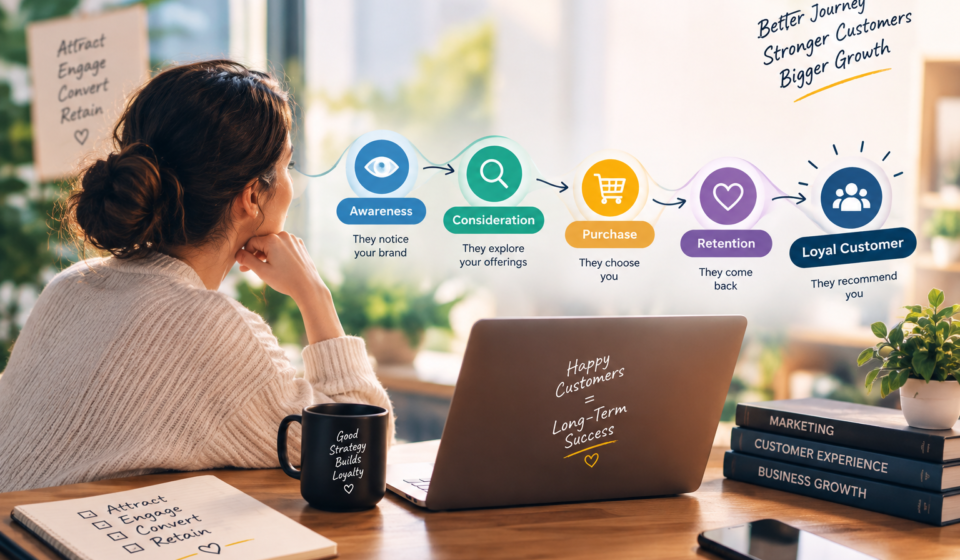
To achieve sustainable growth, you must intentionally design a customer journey—the complete series of experiences, touchpoints, and interactions a person has with your brand, from their initial awareness all the way to post-purchase advocacy.
Here is a step-by-step framework to map, build, and optimize a customer journey that seamlessly transforms curious first-time visitors into lifelong loyal customers.
Stage 1: Awareness & The First Impression (The Discovery Phase)
The customer journey begins long before a user lands on your homepage. It starts when a potential buyer realizes they have a problem or desire and begins searching for a solution.
1. Optimize Your Entry Touchpoints
First-time visitors reach your business through various channels: organic search, social ads, referral links, or content marketing. To make a lasting impression:
- Maintain Message Match: Ensure the promise made in your ad, search snippet, or social post aligns perfectly with the content on the landing page. Disconnect creates friction and immediate bounces.
- Focus on High-Intent Keywords: Craft educational blog posts, landing pages, and guidebooks that solve immediate user pain points.
2. Master the “5-Second Rule”
When a new user lands on your site, you have roughly five seconds to communicate three things:
- Who you are
- What problem you solve
- What step they should take next
Keep your website design clean, uncluttered, and mobile-optimized. Your Unique Value Proposition (UVP) should be prominently displayed above the fold. Avoid cryptic slogans or heavy jargon—use plain, customer-centric language.
3. Prioritize Speed and Accessibility
A delay of even one second in page load time can reduce conversions by up to 7%. Ensure your website loads under two seconds, features clear navigation, and is fully accessible across mobile, tablet, and desktop devices.
Stage 2: Consideration & Value Demonstration (The Nurture Phase)
Once a visitor decides to stay on your site, they enter the consideration stage. At this point, they are evaluating whether your product or service is the right fit for their needs compared to competitors.
       [ Stage 1: Awareness ]
                 │
                 ▼
     [ Stage 2: Consideration ]
                 │
                 ▼
      [ Stage 3: Conversion ]
                 │
                 ▼
      [ Stage 4: Onboarding ]
                 │
                 ▼
      [ Stage 5: Retention ]
1. Build Immediate Trust and Social Proof
First-time visitors are naturally skeptical. To lower their perceived risk, integrate strategic social proof across key decision-making areas of your site:
- Customer Reviews & Ratings: Display real, verified buyer reviews on product pages.
- User-Generated Content (UGC): Show photos or videos of actual customers using your product.
- Trust Badges & Security Icons: Highlight secure payment methods, SSL encryption, money-back guarantees, and clear return policies.
- Media Mentions & Case Studies: Showcase logos of recognized publications or clients you have worked with.
2. Deliver Instant Value Without Demanding a Sale
Not every first-time visitor is ready to buy immediately. Instead of pushing for an immediate transaction, focus on capturing their contact details so you can build a relationship over time.
- Lead Magnets: Offer a valuable, free resource in exchange for their email address (e.g., a downloadable guide, a free template, or a discount code on their first purchase).
- Interactive Tools: Use quizzes (e.g., “Find Your Perfect Skincare Routine”) to engage users while gathering preferences and zero-party data.
3. Implement an Automated Welcome Email Series
Once a user opts into your email list, trigger a personalized, automated 3- to 4-part welcome sequence:
- Email 1 (Immediate): Deliver the promised incentive (discount or download), warmly welcome them, and reinforce your core brand story.
- Email 2 (Day 2): Share educational content that addresses common objections or teaches them something useful related to your niche.
- Email 3 (Day 4): Highlight your best-selling products along with customer reviews and testimonials.
- Email 4 (Day 6): Provide a soft call-to-action (CTA) with a gentle reminder to use their introductory discount before it expires.
Stage 3: Conversion & The Checkout Experience (The Action Phase)
The conversion stage is where a user transitions from a passive browser to an active customer. Any friction at this critical juncture can cause high shopping cart abandonment rates.
1. Eliminate Checkout Friction
- Offer Guest Checkout: Never force users to create a full account before making a purchase. Account creation should be an optional, one-click step after the purchase is complete.
- Minimize Form Fields: Only ask for essential information needed to process and ship the order.
- Provide Multiple Payment Options: Integrate modern, convenient payment channels, including credit cards, digital wallets (Apple Pay, Google Pay), and Buy Now, Pay Later (BNPL) services like Klarna or Affirm.
- Be Transparent About Costs: Unexpected shipping fees or hidden taxes at checkout are the leading cause of cart abandonment. Display estimated shipping costs and taxes early in the process, or offer free shipping thresholds (e.g., “Free shipping on orders over $50”).
2. Utilize Intent-Based Retargeting
If a visitor adds an item to their cart or browses specific product pages but leaves without buying, re-engage them promptly:
- Abandoned Cart Emails: Send an automated email 1 to 3 hours after cart abandonment showing the exact items left behind, accompanied by customer reviews or a limited-time incentive.
- Dynamic Retargeting Ads: Run gentle, non-intrusive social media ads showing the products they recently viewed.
Stage 4: Onboarding & Post-Purchase Experience (The Fulfillment Phase)
Many businesses make the mistake of stopping their marketing efforts once the credit card is charged. However, the post-purchase phase is where true customer loyalty is won or lost.
┌─────────────────────────────────────────────────────────────┐
│                 Post-Purchase Touchpoints                   │
├──────────────────────────────┬──────────────────────────────┤
│ Touchpoint                   │ Primary Goal                 │
├──────────────────────────────┼──────────────────────────────┤
│ Order Confirmation Email     │ Reduce Buyer's Remorse       │
│ Proactive Order Tracking     │ Manage Delivery Expectations │
│ Unboxing Experience          │ Create Emotional Delight     │
│ Post-Delivery Follow-Up      │ Ensure Product Satisfaction  │
└──────────────────────────────┴──────────────────────────────┘
1. Send an Informative Order Confirmation
Immediately after purchase, send a clear, branded confirmation email. Include:
- An itemized receipt and total cost summary.
- Estimated delivery dates and shipping details.
- Clear instructions on how to reach customer support if needed.
- A brief note of genuine appreciation from your team.
2. Turn Shipping into a Delightful Experience
The waiting period between order placement and delivery is filled with anticipation. Turn this into a brand-building opportunity:
- Proactive Tracking Updates: Send SMS or email notifications when the package is shipped, out for delivery, and delivered.
- Educational Pre-Arrival Content: Send quick tips or guides on how to setup, use, or care for the item while it is in transit.
3. Elevate the Unboxing Experience
Physical packaging is one of the few offline touchpoints you have with online buyers. Make it memorable:
- Use high-quality, branded, or eco-friendly packaging materials.
- Include a personalized, handwritten thank-you card.
- Insert a simple quick-start guide or a surprise free sample.
Stage 5: Retention & Advocacy (The Loyalty Phase)
A one-time customer contributes to your top-line revenue, but a loyal customer drives long-term profitability. In this final stage, your goal is to turn satisfied buyers into brand advocates who return regularly and refer others.
1. Build a Dedicated Customer Loyalty Program
Reward customers for their repeat business and engagement. Structure your loyalty program to give points for multiple actions:
- Making a purchase
- Writing a review
- Following your social media channels
- Celebrating a birthday
Allow customers to redeem points for discounts, exclusive products, or free shipping. Tiered loyalty systems (e.g., Bronze, Silver, Gold) encourage higher spending by offering escalating perks as customers move up levels.
2. Implement Personalized Post-Purchase Email Marketing
Leverage customer purchase history to deliver hyper-targeted post-purchase communications:
- Replenishment Reminders: If you sell consumable goods (like skincare, coffee, or supplements), send automated reminders to reorder right before their product runs out.
- Cross-Selling & Up-Selling: Recommend complementary products based on what they previously bought (e.g., “Since you purchased our camera, here are the top 3 lenses that fit it”).
- VIP Access: Invite repeat customers to early product launches, private sales, or exclusive brand events.
3. Request Feedback and Act On It
Show customers that their opinion matters. Send a post-purchase survey (NPS or customer satisfaction survey) 7 to 14 days after delivery asking about their experience.
If a customer leaves positive feedback, automatically invite them to leave a public review or join your referral program. If a customer expresses dissatisfaction, route their feedback directly to customer support so team members can resolve the issue immediately.
Mapping and Measuring Your Customer Journey
Building a customer journey is an iterative process. To ensure your efforts produce measurable business results, continuously monitor key performance indicators (KPIs) at each stage of the funnel:
| Journey Stage | Primary Objective | Key Performance Indicators (KPIs) |
|---|---|---|
| Awareness | Drive qualified traffic | Bounce Rate, Click-Through Rate (CTR), Page Load Speed |
| Consideration | Build trust & capture leads | Time on Site, Opt-In Conversion Rate, Micro-Conversions |
| Conversion | Turn visitors into buyers | Conversion Rate, Cart Abandonment Rate, Average Order Value (AOV) |
| Onboarding | Ensure immediate satisfaction | Order Return Rate, Customer Support Ticket Volume |
| Retention | Maximize long-term value | Customer Lifetime Value (CLV), Repeat Purchase Rate, Net Promoter Score (NPS) |
Conclusion: Loyalty Is Built Step by Step
Converting first-time visitors into loyal brand advocates does not happen by accident. It is the result of a deliberate, empathetic, and continuous customer journey strategy.
By removing friction at every touchpoint, delivering value before asking for a sale, creating an exceptional unboxing experience, and continuously rewarding repeat business, you transform your website from a simple transactional platform into a thriving, customer-centric ecosystem. Start by mapping your current user flow today, identify where friction exists, and systematically optimize each step along the path to purchase.